
Viewpoint Diversity
the administration demands...phew!

Now a showdown between the Trump administration and Harvard University—one of the world’s most famous schools. The government, using the Department of Education, sent Harvard a long list of demands. These included changing how Harvard admits students, hires staff, and runs its programs. The threat was serious: if Harvard didn’t do what was asked, over $2 billion in federal funding could be frozen, and Harvard would even lose its tax-exempt status.
The administration said these demands were about making sure Harvard followed civil rights laws—specifically, laws that ban discrimination based on race, color, national origin, or religion. The first list of demands told Harvard to get rid of programs that might allow antisemitism, enforce its own rules on student behavior, and stop using race, gender, or religion as a factor in admissions or hiring. It also called for shutting down diversity, equity, and inclusion (DEI) programs.
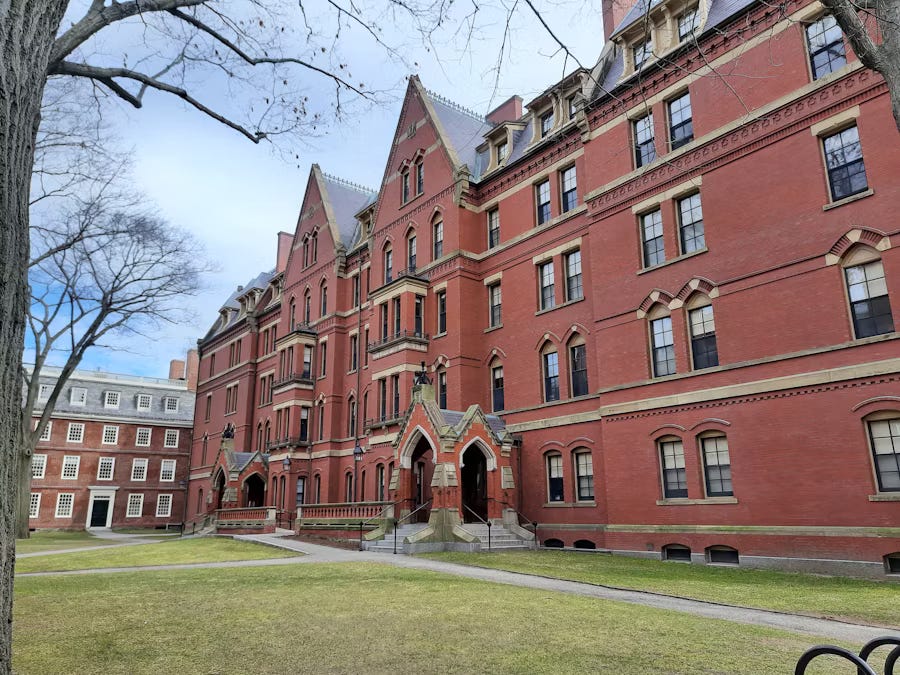
Some people see Harvard as standing up for its independence against political pressure, while others argue the government is just asking Harvard to follow the law. But here’s the problem:
The administration’s demand for “viewpoint diversity” would force Harvard to hire or admit people based on their political beliefs. That’s the same kind of “litmus test” the administration says it opposes when it comes to race or religion. It’s a contradiction, and it could hurt the very idea of free inquiry that universities are supposed to protect.
For those of us who care about open debate and the opportunity for a good education, this is a turning point. If the government can control what happens at Harvard, it could do the same anywhere. That puts the future of academic freedom at risk—not just at Harvard, but at every college and university in the country.
This is an important episode of Sam Harris’ pod.
Are Conservative Voices Being Marginalized in Academia?
Exploring the Experience of Conservative Students and Faculty on Campus
If you’ve followed debates about higher education, you’ve probably heard the claim that university faculties are overwhelmingly left-leaning. But beyond the statistics, what is it actually like to be a conservative student or professor on a modern campus? Is there truth to the feeling of isolation and pressure to keep quiet? Let’s take a closer look—drawing on recent research, personal accounts, and the broader conversation about intellectual diversity.
The Numbers: A Stark Imbalance
Surveys consistently show that university faculty, especially in the social sciences and humanities, are overwhelmingly left-leaning or Democratic. In some departments, the ratio of Democrats to Republicans can be as high as 78:1. While this doesn’t automatically mean conservatives are unwelcome, it does set the stage for a unique set of challenges.
What Do Conservative Students and Faculty Experience?
1. Self-Censorship and Silence
A striking number of conservative faculty—nearly half—report feeling unable to voice their opinions for fear of professional or social backlash. Over half say they sometimes hide their political views to keep their jobs. This isn’t just about faculty meetings; it extends to classroom lectures, research topics, and even casual hallway conversations.
2. Departmental Climate
Many conservative academics say their departments would consider a conservative colleague a “poor fit.” Surveys suggest that 70% of conservative faculty believe there is active discrimination against them based on their beliefs. This can lead to a sense of being an outsider in one’s own workplace.
3. Threats and Professional Risks
More than a third of conservative academics and PhD students in the U.S. have reported being threatened with disciplinary action for their views. In some fields, over 90% of Trump-supporting academics say they would not feel comfortable sharing their views with colleagues.
4. Student Isolation
Conservative students often describe feeling lonely or excluded on campus. Some recount direct negative comments from peers, while others simply feel there’s a lack of support or understanding for their perspectives.
5. Avoiding Controversial Topics
About 30% of conservative faculty feel pressure to steer clear of controversial subjects in their teaching or research—three times the rate of their liberal colleagues. This can limit classroom debate and the academic exploration of important issues.
Why Does This Matter?
From a conservative perspective, these experiences are not just personal grievances—they raise broader concerns about fairness, intellectual diversity, and the mission of higher education. If certain viewpoints are marginalized, can universities truly claim to be places of open inquiry?
On the other hand, many academics argue that hiring should be based on expertise and merit, not political affiliation. They caution against imposing quotas or ideological litmus tests, which could undermine academic freedom.
A Path Forward
Most agree that universities should not be places of enforced uniformity—political or otherwise. Instead, the goal should be to foster an environment where all viewpoints can be discussed openly and respectfully. That means:
Ensuring hiring and promotion processes are free from ideological bias.
Encouraging open dialogue in classrooms and campus events.
Supporting academic freedom for everyone, regardless of political leaning.
In summary:
The sense of isolation and pressure felt by many conservative students and faculty is real and well-documented. Addressing it thoughtfully is essential—not just for conservatives, but for the health and credibility of higher education as a whole.
What’s your experience? Have you seen or felt these dynamics on campus? Share your thoughts in the comments below!